My Secret Dandelion

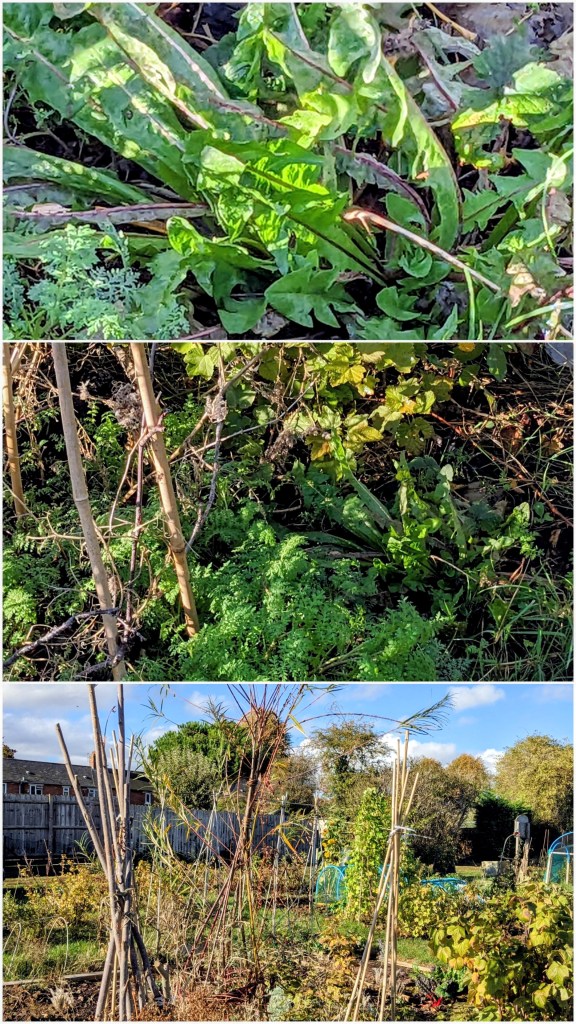
Dandelion leaves only pictured here in the ground and then in context, under the wigwag at the allotment… An allotment I’m trying to make as wildlife friendly as possible, under the watchful eye of the Town Council… There are rules about keeping them neat & productive after all.

However if you saw #FrancesTophill on #GardenersWorld recently, when she said that planting annual veg, in rows, is not the way to go for wildlife, you’ll understand my growing urge to create habitats & ecosystems rather than say picture perfect monocultural cabbage patches (Mine got eaten to bits by flea beetle anyway, this year. Total fail, for me, anyway!).

Spreading brassicas out limits the risks of predation a bit apparently – we’ll see “). Pigeons & birds still pose a risk though, so hiding them amongst other taller plants is good idea?

Funnily enough I attended a wildlife friendly webinar this week from the Wildlife Garden Project) on which the speaker said the very same thing! Along with recommending perennial veg which do not need half as much water, or watering, as they are able to grow stronger root systems over time and pick up more nutes from the soil.

We are lucky to have water on site (although of course the hosepipe ban applies) but the endless watering allotmenteers were doing this year did feel a little counter productive. Not to say too exhausting, in that heat! (Bonfires on site have been banned too, because of the very real new danger of spreading fire with these soaring summer temperatures.)

Adding wildflowers and companion plants is the way to go – I now can’t wait to sow flower seeds broadly & widely next year (and perhaps earlier, like now this autumn) to see what survives & thrives. Nasturtiums, cornflower, calendula, tagetes (& basil & garlic) – the smell these give off throws bugs off the mustardy brassica scent.

But back to the dandelion … hiding in among the self-sown phacaelia seedlings, behind some willow structures and sheltered by the shed. I’m going to keep it there so that come February it might flower and feed early flying Queen Bumblebees as they emerge from hibernation.

So in a funny way, the dandelion when it flowers, will be my “funny Valentine” in the immortal words of Tom Waits, to the new burst of wild life very early next Spring.

Wildlife friendly window cleaning

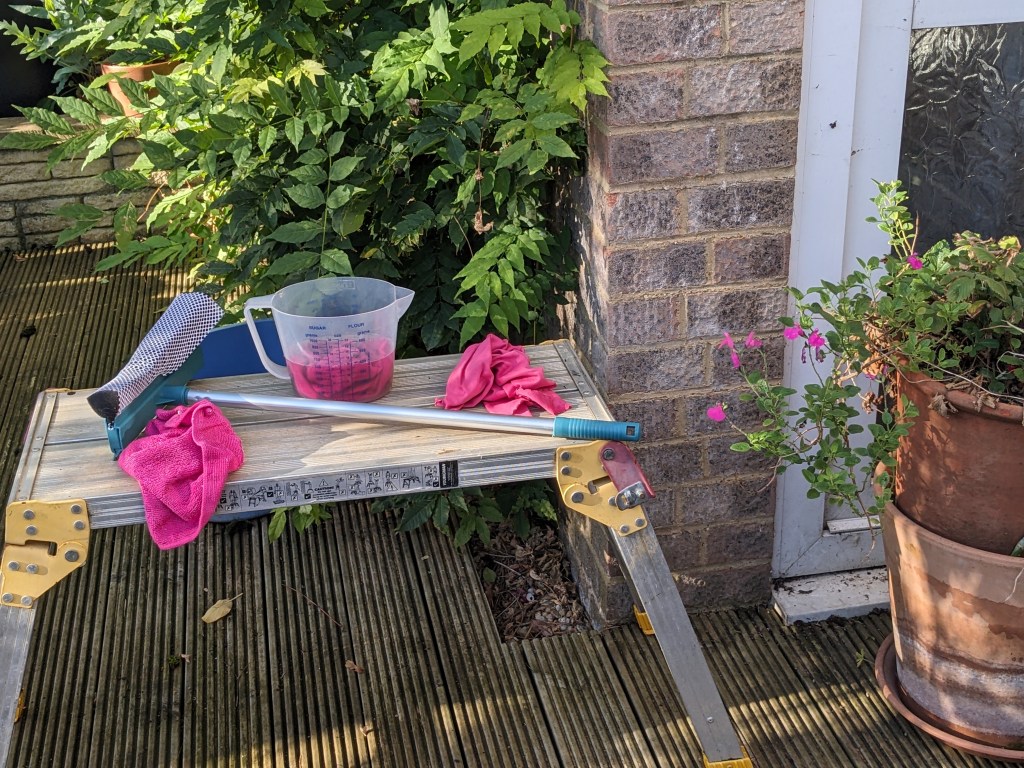
“What on earth is that?” you may ask. Well what I mean firstly is that am using eco washing up liquid hopefully less of a surfectant than normal big brand types (and hopefully less disruptive to our precious water supplies down the line).

And then trying not to be tempted to remove all the little cotton wool like spiders’ nests in the corners because come Spring little birds like Blue Tits and even whole families of Long Tail Tits might come along and cling to the window frames to feast on those! Definitely a sight to behold from the kitchen window – I couldn’t work out what they were doing / what was going on. But a quick Google search and query to the RSPB soon solved that particular mystery.

Just to say of course if that doesn’t sound very spider friendly – well there are I know hundreds if not thousands of those in my garden already. They often provide a local food source for passing sparrow families to come into the garden to snack on. Most often in the afternoon which I’ve never until now understood (as to whether it was more to do with the rosier light at that time or more to do with their eating habits?). A quick Google search confirms it’s to build up their energy reserves before the cold of the night time arrives. Makes sense.

The sparrows by the by make a good job of any aphids on the roses, too. Now aphids there are usually plenty of as well – the females somehow being born pregnant and full of fertilized eggs (can’t remember exactly how!)

But it’s good to a sign that natural food cycles are being completed when you’ve got the “pests” and their predators in balance – so that the so called pests don’t take over!

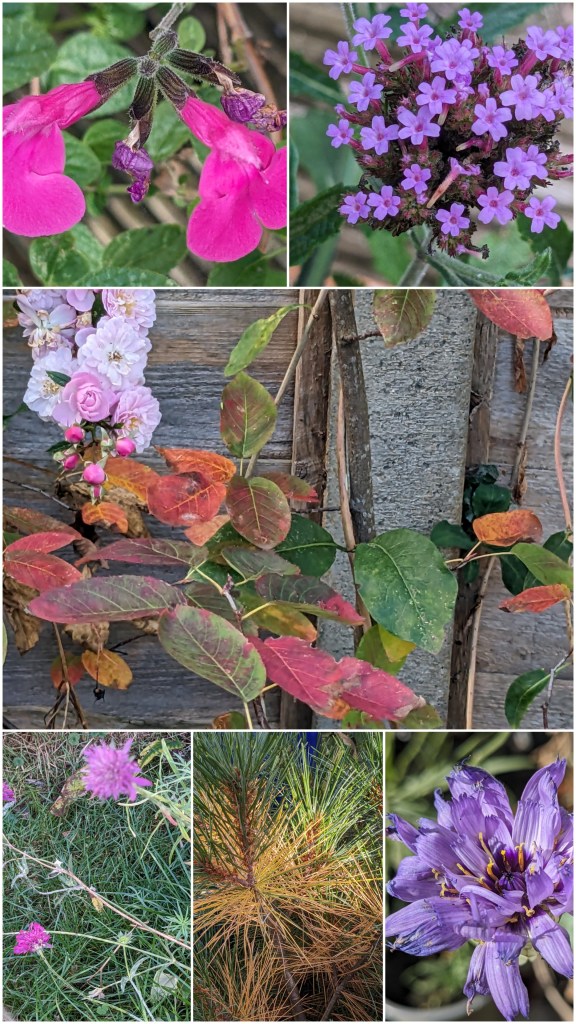
But back to the window cleaning – it’s been a glorious day for it. And I’ve been kept company by sparrows and by the cheerful pinky purple flowers too. There are some warming autumnal colours around as well.

Best of all, having used some of that natural citric acid in the water soap imix too I can see out much more clearly now, in this lower light. Got the specks off using one of those window cleaning microfibre cloths. And now that it’s getting colder (this afternoon and this gradually arriving autumn) that will be helpful when I might just want to spend a bit more time indoors, looking out, into the garden, to see what’s going on and who’s about through luxury sparkly windows!

What a difference a few days make

The other day, warm London sunshine…under the plane trees…

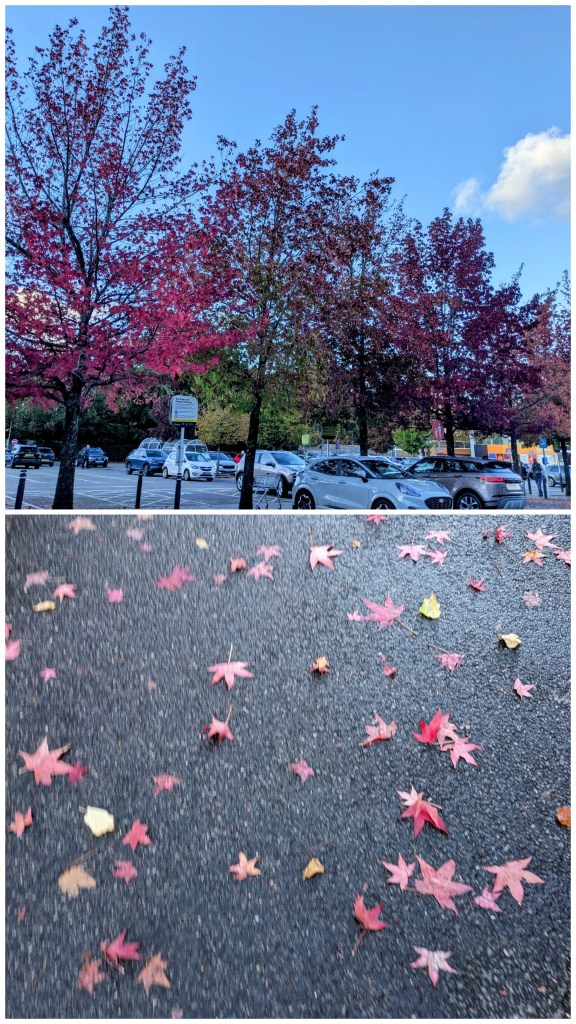
Today a definite freshness in the air… And the much anticipated autumn glow up at local supermarket car park might not last very long, with this chilly wind! Now my friend did tell.me what those spectacular maples are called… Let me just look it up, nope – it’s something like autumn golden glow…These did hang around beautifully last year (it was a windless time) along with the gorgeous red cherry tree leaves which may disappear more quickly this year too.

I had a funny thought – Are leaves called leaves because for deciduous trees at least they leave the tree in Autumn!?!? I wonder…

And the tree leaves them on the ground, so that in the natural cycle of things the dead leaves’ nutrients can be recycled back into the trees roots, eventually. Sheltering all sorts of grubs and caterpillars and larvae – in short all sorts of food for blackbirds and robins… Have you ever seen or heard them and or hedgehogs rustling away, turning over what we gardeners call “leaf litter” to find their next meal?? (We had a hedgehog my hubby called Russel. )

Now isn’t “leaf litter” a little bit of a pejorative term… ?? Um, one I wonder whether the RHS might rephrase some day soon, like weeds are now in officially forbes (sp.?) and pernicious weeds are highly successful & native plants “) 🌿☘️🍀

All to the well and good – we really need to appreciate what we’ve got in terms of successful native resilient plants.

And above all we need to as much as we possibly can, as gardeners itching to tidy, to leave the leaves!! Let’s LEAVE THE LEAVES!! Under the trees 🍁🍂💞🍁🍂

London Life

Just for a day, a few hours even, a visit to the capital today in soaring October sunshine brought back years’ worth of memories of living and working in the city, many moons ago. Not all of them good, much as I love it, with all the white painted architecture and culture on offer…Lunch in Covent Garden with a great friend (from pre-London days even) was a real treat and walking it off through Piccadilly and Leicester Square was crowded but helped along with an ice cream…

But it was Aaaahhhh when we hit the parks, Regent’s Park and St James’s, in the late afternoon sunshine, that my nervous system finally hit wind down. Especially walking past the friendly (hungry) geese and heron and pelicans??? What were they doing there?? And same goes of course for the green parakeets my dear friend hadn’t heard of or seen before! All surprising, wonderful, curious and lively creatures, cheering everyone sat gazing at them.

What was it I picked up on a bluesky post – “Animals [and therein counted birds] teach us what it is to be human”. How true!!! Touching our humanity in what it means to be not a superior being but a fellow creature, with the same needs, and emotions…

It was wonderful to be amongst and under the trees too – The London Planes – with their graceful sheltering arks of branches and dappled leaves of green and yellow. Hopefully dropping calming phytoncides, too – astonishingly good and relaxing chemicals that trees can rain down. ( Not sure if that’s just a Spring thing! But certainly validates Japanese tree-bathing).

Inevitably conversation turned to how warm it actually is, with many people in T-shirts, in October. I remember quoting that stat from the telly (#GardenersWorld ?) about how by 2050 London will be as hot as Barcelona is now. It’s not that long really…

A fellow passenger travelling home said of his visit to Regent’s Park today “This kind of feels like it’s real summer – it’s not right!”

(I had a picture to post (that I can’t remember how to load) but I’m sure you can imagine, the low sunshine through the shimmering leaves, fountains in the lakes splashing helpfully in the background and the squeak of geese and ducks….”)

“”

Last week the Greens, this week @PAN_UK

We’re all familiar with the roses which struggle on into November. I’ve remembered seeing some back in December in the 90’s and can recall my astonishment at seeing them then: winter roses. Long before I ever started gardening.

But this year! For wildflowers to be reflowering in November, when it’s normally freezing – Well nice as it is (and hugely good for the fuel bills) there is/must be something a bit wrong here. It has a name of course – fairly innocuous sounding really – #climatechange. This term never seems to adequately sum up the disastrous melting of the polar ice caps, the flooding of low-lying deltas (where milllions of people live) and the catastrophic decline in wildlife and insect life that will finish us all off, if we’re not hugely careful….

Just in my #wildlife garden I have Rosemary flowering now (that shouldn’t flower until February/March?) Sweet Rocket reflowering like it was summer and even the raggedy Ragwort making another appearance with a few flowers. Only the Michaelmas daisies are seasonally appropriate here!

While this must be good news for some insects and animals, can’t help feeling there’s a whole other bunch that unless they get some real winter soon, will struggle to survive / behave as normal. Are hedgehogs hibernating yet? Do they mind?? I honestly and clearly don’t know enough about it, I just know that if it’s this warm here, unseasonably, the whole ecosytem’s is likely out of whack to a lesser/larger extent. From what the UN is saying (which the fossil fuel lobbies are trying to drown out) we’re only talking 1.5 degrees celsius, anyway! As in the whole planet has only to warm that much to spell total disaster – for the poor and innocent people, who won’t be able to relocate or will lose their whole island homelands anyway.

Even my cultivated plants are still flowering away, the cosmos I grew from seed, the antirrhinums I grew from seed – and the wild chicory too. From sharing on twitter I can see lot of other people’s gardens are full of unexpected colour, too. Glorius but slightly disturbing…

So – I can’t just sit here and write about it. I can try to promote non-use of pesticides, which are spiralling the biodiversity loss we’re already experiencing out of control; and leaving leaves on the ground as temporary but nevertheless vital winter shelter for numerous tiny species, some of whom we can’t or will never see; and cutting down on our own light pollution that confuses and distracts moths from going about their normal business, not least reproducing which we need them to do to survive!

We have so much to learn about how our interventions, intensive farming and use of chemical technologies has affected our planet, our Earth, our very soils. But it doesn’t take a genius to work out that crop sprays, over fertilising and pesticide use – all essentially poisonous to whatever they come into contact with (including us!) MUST be having a detrimental effect. You’d think that Councils and Governments would have picked up on this by now, but no. (NO they haven’t…it can’t be in their financial interests….)

My local council saw fit to using Roundup so potentially poisonous to pets, that they had to send in their contractors in protective clothing to respray the affected (pesticided) areas with blue spray, to try a deter the dogs and pets we do seem to care about protecting from sniffing down some harm.

Why not just use wood chip in the first place????? A weed deterrent that is very effective and actually improves the soil!!!!

Well I tried a complaint direct to the Council (who the actual contractors/workers told me are directly responsible for their hire) – And predictably I got fobbed off by the Council with contact addresses for the developers – who probably don’t care tuppence. I mean they don’t seem to care about installing proper storm drainage or even sufficient green spaces in their ‘developments’ which look like glorified car parks with houses parked alongside the cars, in a sea of tarmac.

I had asked the Council to consider no implement a BAN on all pesticide use. I got fobbed off – and have been sitting on this, wondering how to continue the fight. Bit difficult, single handed. Not impossible. But hence why – with a myriad of other reasons – last week I joined the Greens (The Green Party) and this week have signed up as an active campaigner with PAN_UK. Both part of global networks of people who actually do care. Like the huge pro wildlife contingent on twitter (who I hope survive there with the ownership changes afoot). PAN_UK promise to inform me of how to go about campaigning against pesticide use – And I’m ready to learn. They’ve had some significant successes – most notably in Birmingham lately. So please do watch this space!!!

Olive Branch

I’d like to extend an olive branch to any all readers of my last blog in case my complaining about our late Queen and Empress Victoria before her did not go down too well…. For perhaps not having done as much as they might have, perhaps, to protect wildlife and wild spaces. (Prompted by the seemingly anodyne Great British Countryside spaces, a C4 film running on a loop which was supposed to be calming but which just happened to mention the peat and heathland being burned to encourage the heather beloved of the Grouse specially bred to get shot! I’m sorry but this is terrible and was a shock to learn about…as is the number of intensively bred pheasants being loosed in the worst bird flu epidemic ever).

I am sorry if the timing or indeed ideas offended anyone. I was a bit shocked at myself- and the day after came down with laryngitis – quite fittingly losing my voice. More reflection followed. Added to the updown swings of bipolar, abyss to high in matters of days…sometimes at the same time even. (Like being torn in half sometimes). I’m getting some great help understanding these swings (plus attendant anxieties) lately and I’m so grateful! Like many, recent politics (and particularly the .Gov #AttackonNature) have left me feeling quite ill. Nature is the one balm.

But in fact a helpful piece of knowledge has come my way, this week – twice now, from two different sources. And that is that it’s not all any one person’s fault. As in any one individual isn’t to blame. For the challenged ecosystems and dodgy infrastructures and corrupt political webs that we are born into.

In fact when you come right down to it, no one person is even at all accountable for their own birth, and arrival on this beleaguered earth. It sounds obvious, but for a slightly bipolar depressive like me, it’s like music to my ears now that I am letting it really sink in.

Not that we’re not all accountable for our own actions which all add up of course, collectively – but there the truth is doing one thing small to help Nature helps us cope too. Gives us a lift. Like seeing a beautiful animal or flying creature. There weren’t any butterflies I could photograph in my garden lately. The only one I’ve snapped recently was on somebody else’s outside south facing wall, which was covered in flowering ivy.

Now native flowering ivy is something I’d love to find space for in my garden. But with the now very large viburnum also evergreen, it’s hard to see where it could go in my already over filled garden. Perhaps by the mini hedge in pots?

We could all always do more, just like both our Queens could even perhaps have done a bit more – but the Meadows initiative of our late Queen Elizabeth was a pointer, to where we need to get back to if wildlife and insect numbers are going to recover from their current decline.

The one thing I’m going to do this Autumn is try very hard to leave plenty of ‘leaf litter’ – as the latest research is indicating that the lack of leaf piles ( due to leaf blowing etc) is resulting in another huge habitat loss for the grubs and caterpillars, which over winter in them. I should know, I found a good colourful few last year, sheltering in the leaves round the doorstep. Most unexpected in the damp and cold!

It will be hard, fighting my natural or instilled human urge to ‘tidy up’. But listening into the online AGM of the local Butterfly Conservation branch yesterday did confirm my suspicions and worst fears – the general trend agreed with my many fewer sightings of Red Admirals and Peacocks and this decline in numbers were recorded by others, across the region. These were species which this year didn’t seem to cope with the severe drought we had this August. Numbers started out quite well but dropped off. This beauty wasn’t in my garden either, I snapped it off the telly! Best go now, as a storm is raging, lighting up the night sky…

We could all do more (Royals included!)

By harming the Rainforests “they are ultimately harming themselves” Amazonian Chief speaking of the Brazilian Govt sponsored gold-miners & farmers who are making “quick bucks” that will be the end of us all.

This is one woman Chief who could not be doing more, along with her son. By practising what Simon Reeves on BBCTwo has called “careful Leadership”, this tribe have picked from the best aspects of modern life – education and communication – in order to continue and disseminate their valuable knowledge and traditions of #forestgardening – the cultivation of plants that can provide effective natural medicine within the Rainforests. (No need for Big Pharma then – not that Pharma legalised drug money would see it like that).

All that glisters – golden Knapweed seedhead – real gold mining using mercury is costing lives and bringing destruction

There is also no need for Intensive Farming – as modern scientists are ONLY JUST discovering. By growing in forests, a balanced natural mix of trees and other species is achieved which really is the best way forward for the plants, and the planet and getting the best (most eco-friendly) results for us.

These peoples know the value of a Brazil Nut cluster found on the forest floor – saying how [instead of eating and selling them] they can break the cluster open and grow at least 12 new Brazil Nut trees with the wonder inside. I was so touched by discovering this in Lockdown. It was a revelation so profound I’ve probably mentioned here before – which made me think through how I’ve chomped unthinkingly through probably intensively farmed brazil nuts (and bemoaned a price rise if it’s been a difficult harvest). These nuts themselves have medicinal properties – and ward off depression (hence why I’ve been eating them). But to these peoples they are precious.

It was European greed and diseases the time of the Inquisitions/Conquistadors that put paid to the 25,000 strong populations of tribes living in the Amazon Forest gardens. It was Victorian mining and Empire Buildling that fuelled the land grabs and decimation of natural landscapes to plunder resources in a mechanised, industrialised way that we see today – all in the name of progress and empire. Could not the self-absorbed Victoria have seen that? Was there even a nag of doubt? Could she not have done more to protect the Highlands she was so fond of, or was she so truly enamoured of the bare hillsides and peat burning to make way for deer and grouse shooting? Not even a glimpse of the damage – or an inkling to make up to the Highlanders after the horrors of the enclosures? I don’t know.

Even our just buried Queen, in present times, did not do much to reverse the damage the privileged landowners have done, including herself, by promoting racing, deer hunting and grouse shooting. But were Huntin’ & Shooting’ just too engrained – even thought the cost to the environment, the ecosystems and the whole planet are now clearly and widely known?

Credit Guardian Newspaper – bonkers grouse shootng

I didn’t know until today (thanks to channel 4) that the reason the Highland peatlands are burnt is to encourage the Heather that the Grouse like to eat (before they are shot).

I tell you what though – we’re all shot – and done for – unless somebody and preferably a royal figurehead (hint hint King Charles) stands up to this complete and utter nonsense. For it is completely nonsensical in this day and age – facing the climate emergency that we are, that this increasingly criminal behaviour is allowed to continue.

Thankfully, am reminded today again by Channel 4 that estates like Allardale and Sir John Lister Kaye’s own Aigas Field Centre are trying to combat the decimation of the Caledonian Forests and reintroduce wild cats, respectively. And the Highland Peat Blanket Bog is no longer being drained – one of the biggest peat carbon sink arguably in the world.

Meanwhile, on my little patch, I can only do my little bit. I’ve discovered via Carol Klein that my fave Geranium Roxanne = Rozanne (sorry showing my age) – is sterile – therefore no good to bees. I should/could have grown Geranium pratense – or meadow cranesbill as it’s known – the wild one that grows and glows so beautifully all by itself in the grass verges in summer. Such a brilliant blue are its flowers it always feels a huge privilege to see it. It is a colour I could link to our late Queen who has at least left us not too droopy and swathed in black like Victoria did, after her own life half spent in mourning.

Rozanne with a blue salvia and I can’t remember Cerinthe, that’s right!

There is some brightness there – and a possible, wan ray of hope in “eco Charles” although the establishment and our current politicians and the “quick buckers” will probably put paid to too much progress there.

Meanwhile, in my own garden, another newtlet sighting! An eft – bottom right here, seen this morning and smaller than the last one I saw, so much be a new one. Such a joy!

Certainly cheered me up when feeling low and a bit poorly – and appalled by the ways of the world!

Me and ‘my’ Butterflies

I haven’t seen that many this year…Just once during the #BigButterflyCount (July 17-Aug 8th – today) have I managed to spot 2 Peacocks and 2 (I’m pretty sure) Red Admirals…in any one count. Compared to last year when I regularly had 4 or 5 of each every day in July…

Single Peacock into land

They are no more ‘my’ butterflies of course than anyone else’s. In they fact belong to no one on this earth. It is however our responsibility to see that how we live, currently, is causing a drastic decline in these beautiful species, most of which are on the endangered list now….Which means they never be seen again – in our lifetimes, let alone during those of the people and other animals to come. We are helping heat up the earth to a such a degree (excuse the pun) or point where very soon, not much will survive us (and we wont last that long).

Dry dry dry summer of 22

What a pity that would be! I’ve counted far fewer Peacocks and Red Admirals and Tortoiseshells this year – last year had what seemed like lots on the Buddleias I grow especially for them and for the whole the time they were flowering. This year only like I said only two at any one time – and then only twice. the Buds are nearly over and dried out now already. It could be a bad year of course, like last year was a good year – but it is part of a general demise in Nature, seen all over the world.

What butterflies and other struggling species need is quite simple really – for us to love them! Who couldn’t love these beauties…

Common Blue – I think – saw 1 this year

With that love, and sense of connection in common with the unconditional love we have for our closest friends and families…is the willingness to make the odd sacrifice. Unconventional gardening – with Nettles and other fave larval foodplants…

Comma caterpillar on the Nettles – next day it was an empty case and new instar had disappeared

Leaving some long grasses over winter, so that all sorts of Butterfly larvae can shelter and subsist in them – some coming out to eat a bit if there’s a warm spell. Not using pesticides, herbicides and even fertilizers – keep it as organic and peat free as possible (to help stop global warming and keep valuable peat CO2 sinks elsewhere in the world). Grow trees – for Speckled Woods – I had a visiting Speckle Wood this year! Dream come true.

Prize for spotting it here in the long grass by the wildlife pond…My first Speckled

But it’s more than that – it’s feeling the connectedness with them. They are not just beautiful and getting rarer, they are part of the eco systems that we and our govt and local councils and cars seem set to rubbish into oblivion. (If you follow me on twitter you’ll have heard me say: this govts Net Zero Strategy has been challenged by Friends of the Earth and found at High Court to be woefully and illegally inadequate. What are they doing about it? Nothing. Not Liz Truss not my MP in DEFRA – Nothing.

nature connectedness is a thing: https://www.derby.ac.uk/research/centres-groups/nature-connectedness-research-group/ and it’s kind of as if not more important than connecting in with ourselves, to feel what we really feel. Looking at this govt, well I wouldn’t want to put those emotions into words….

Kind of means it’s up to us! Chris Packham in the opening of my new butterfly book by Peter Eeles says it’s about the excitement, too – to spot a rare or beautiful butterfly is a very fine thing!

Orange tip seen earlier this year

It only takes a moment – or fifiteen, I’ve found, taking part in the Big Butterfly Count. https://www.wcl.org.uk/the-big-butterfly-count-2022.asp There’s still this evening!

Sitting quietly, or looking around, spotting fluttering creatures that I hadn’t previously seen were so close to me – wow, those are special moments. Tapping in – tuning in to the roundabout greenery, first I notice all the comings and goings of bees and hover flies (and moths that look like hoverflies – I’ll never tell the difference @BerrieTree!) then spotting a specially large flapping fast irregular – its a Gatekeeper the one and only one that seems to have settled in my garden, keeping me company.

Sadly the Speckled Wood hasn’t stopped here – I only saw it once, one afternoon – but oh the delight! Quite transporting, to use a Jane Austeny type word! I’d been hoping they’d come, so feisty and funny and characterful they are… quite wonderful. They like dappled shade in clearings, so y garden must be nearly there, surrounded by tress and tall plants on three sides now…many be next year.

Like gardening, wildlife watching gives you hope. Hope in next year – even against the odds. Joy abounds when you see what you were looking for – be it a frog or a beautiful Painted Lady from Africa this year, or a Speckled Wood. Spellbound I was!

Looking for things to be thankful for

in the Natural world around us

Last time I wrote I was so…distraught, really, at the state of politics in this country and the world over, what with all the #climatecrisis denying behaviour going on. (As it is still – as if the climate was the only seemingly insolvable problem – a bit daft given that all the human pollution we continue to create is a contributory factor to that and proving a huge problem in itself to solve). It was local elections at the time – and the other desperation that came into play, a desperation that it’s so easy to give into at the moment, which is the seeming lack of care of so many people, voting the Tories back in here there and everywhere – although it’s clear they don’t often giveadam (pardon the expression) about the environments we live in or create around us (sterile concrete flood zones devoid of trees or space or earth, even, so often). So yes there’s plenty to get depressed about, and it turns out I am – clinically I mean – depressed.

Now I’m getting some help with that, which I’m hugely grateful for, it’s opening the door for me to find more things to be thankful about. Little things – but along the same lines that I’ve been looking down – as so many have during and since Lockdown – for things to make us smile – in Nature.

Daisies nearly always make me smile

The fact that so many species that were once commonplace but now are in desperate decline means we can be even more thankful for spotting them – most butterflies and moths, types of hoverflies and even Garden Birds (now so under threat from avian flu). We can be even more glad to be of help to these species in their survival efforts by providing pesticide, herbicide and fungicide herbicide free environments. Poison free Oases if you like.

long grass meadow with oxeye daisies corncockles verbena and tiny wild sweet williams (top left)

I’ve found it really can be as simple as allowing long grass to grow and adding in daisies and the like. I’ve loved mine and loved adding in also knapweed, scabious, corncockles, lycnhis red loosestrife verbena the colours of which have brought a certain joy – especially when zoomed in on by insects and beetles and hoverflies and bees – and best of all (for me) butterflies. What great pleasure that brings. (in fact excuse me while I just go and look who’s about, now the sun’s come out a minute…)

The overall effect is for me at any rate, quite electrifying! And buzzing with bees, hoverflies and all manner of electric blue and green flies which I sense are glad of a home.

Nothing doing Butterfly wise just now though. Of course not everything I’ve tried (beebombs or poppies) has succeeded very well, if at all. And there are of course always some disappointments in natural life to brook at any one time. (From our sentimental point of view) I suspect that the caterpillars both Mullein and Large (cabbage) white I was carefully nurturing have themselves turned into nourishment for the hungry garden birds (and their families). So it goes.

This handsome fellow, Mullein moth went for a burton

Debating with myself as to whether to show a pic of a Cabbage white caterpillar – surely this is uber familiar to most people (even if as an enemy??) But perhaps not, these days. Not all children will be aware of how or where cabbages grow. Hopefully more will be, what with the surge in interest in gardening and own grown. Here one or two are, anyway – if you can spot them?

No longer there

They’re no longer visible – perhaps they’ve cocooned and come out already as a Large White Butterfly? But I haven’t even seen many of these, this year – once so common. Hardly any small whites at all. What have we done? Where have they all gone?

One of very few Large Whites this year so far…

Gardening does bring a sense of hopefulness though, in the recuperative powers of Nature and the power of wild things to survive. This lovely willow that I grew from a stem in a christmas bouquet, for example, I was afraid I had lost! But it’s coming back into leaf having been pretty decimated and stripped by some kind of larvae.

I find I can allow that to happen and be glad it was useful – and survived! Looking at the glorius pinks of the Magentas and Salvia and Mme de Pompadour de Brougignon (?) roses, from a normal view is like this:

Oh the pinks!

Closer inspection though in one corner shows this decimation going on, which I’m not worried about as the Rose survived this attacker fine last year:

Saw fly larvae in the roses. I suppose Nature is a process, as much as a thing. Much as living things are made of molecules of movement, at heart – at nuclear level. The best we can do at any one time is tune in. Not wade in with poisons or plastic or man made stuff at all. Tuning into ourselves and our drives – that’s one thing. Important enough. Tuning into Nature however, and becoming more aware or the wider whole, the large earth beneath our feet and the mass of life we’re lucky enough to be part of for a while, well…that’s another. Right, the sun’s come out so no more writing time, it’s Butterfly counting time!

Decry you die, Give you live

Some musings on Consolation and Desolation in the world of Conservation

First up, have to say it has rained very merrily since my last (very recent) post. And also have to say that so fixed was I on the MayDay MayDay theme that I missed the fact the 1st of the month has also fallen on the New Moon – the perfect planting time for new seeds! Now it’s even a bit warmer things are looking like really growing. Phew.

However, a bit of decrying, being it calling out injustices and corruption, especially at local government level, has never been wrong. Until now. At national level, it is now apparently even a crime – to protest – especially if loudly. And journalists could be imprisoned for 14 years for ’embarrassing’ the government (with the truth, inconvenient or otherwise?). Worst aspect of this, from where I’m sitting? Not only that we are looking at a more and more and more fashistic (sp???) style of Tory governance, designed to ensure their longevity of power (which really does need shifting). But also, charities are going to find it harder and harder to protest and protect wildlife, our green spaces, ancient woodlands and all places especially after Lockdown that we find sacred.

Terrifyingly, no protected SSI (site of special scientific interest) Nature Reserve, Natural parkland is actually sanctified – or safe from the developers long and greedy arms. They only have to ‘prove’ however spuriously that Biodiversity Net Gain ( for example where they replace Ancient woodland by definition 400 years old with new hedgelings and saplings which will take 20 years to establish any kind of valuable ecosystem, let alone shelter) is achievable. They only have to engage unscrupulously bought off ecologists to ‘persuade’ local Tory councils already stacked in development’s favour…This is not the stuff of nightmares. It is already happening.

Be careful how you vote.

This fearful decrying however, what does it bring, except a sense of hopelessness and utter desolation? – To use part of the phrase first coined by St Ignatius with his principles of Consolation and Desolation, that he is thought to have first dreamt up while stuck for a long time in bed after being gravely wounded in the Crusades (I think)…

It is well to be wise, wise as a serpent Jesus is said to have said, when dealing with wrongdoers. Not all wishy washy lets join in with property investments and fossil fuels as our Church of England appears to be doing…I may be wrong of course and would love to stand corrected.

No – Terror and fear and hopelessness are being deliberately struck into our hearts, by these bullying couldn’t give a s..ts Govt Ministers (apart from the turds in the rivers, in order to pay off the denationalised, mostly foreign I have to say Water companies who are gaily clogging up and killing off our waterways and river life.)

So – saying NO to desolation is quite important.

Not least because saying YES to more hopeful outcomes, where together working at ground level yields results, such as saving and rewilding meadowlands, endangered species such as hedgehogs (great Zoom from PTES yesterday with Hedgehog Hugh !) is emboldening and heartening. Good for the soul.

But noticing the desolation we might feel – (that I often feel, at any rate, at the hopelessness of it all) is important. That sense of sheer desperation at the uncaring hypocritical local MPS who are high up in Defra and do NOTHING to stop the poisoning and paralysation of bees from pesticides (neonicotinoids). By big sugar companies like SILVER SPOON who could well afford the research needed into developing LESS harmful applications and completely non-chemical natural ‘pest’ control (such as companion planting methods) if they so chose. If only this government would stop bowing and scraping (and getting their cut no doubt) to and from big business, prioritising profit over ecological gain in a climate and biodiversity crisis. Oh no. But to give in, and stop decrying altogether would be a failure, a shrinking of sorts.

But balancing it with hopefulness, the consoling knowledge that hopeful progress can be made however small at the start, and that it can grow – like the young woman who grew up in a family all just loving hedgehogs, who has now made her career out of championing Hedgehog Friendly Campuses – well! From small acorns – in conjunction with other lovely and super efficient organisations such as British Hedgehog Preservation Society, Hedgehog Street and Society for the Protection of Endangered Species – and hey presto, great oak trees grow! Thousands of students and school children are made more wildlife-aware, many hectares of land are left to rewild – and it’s a huge success story! Something to celebrate, just in time for National Hedgehog Awareness Week – THIS WEEK!

Genuinely heartwarming – to learn how people can come together and act to form societies and groups that really do make a difference….And truly inspiring too…Might have to think on a bit.

In my own life the sense of this achievement happening out there, being achieved by others is just a little, well annoying!!! If I’m going to be completely honest. No point not. Not yet having found a way to unite with others to get the best possible results, far better than I could ever hope to achieve in my own little wildlife garden. Even if this little plot acts as a little bit of a biodiversity oasis, I can’t tell quite for what wildlife exactly. But I know sharing and recording my finds with others of moths and caterpillars is important to me…exciting even.Just as I’m very aware that I’d love to be part of a wider team, all working towards the same goals of rewilding habitats and helping wild animals thrive again, like they used to. And this could be the spur – to get on with helping create and nurture wildlife friendly neighbourhoods (not just my back yard).

It’s that thing where Giving is Getting – Giving time, energy resources, encouragement mean that’s what you get in return. Plus that amazing sense of joint achievement – for me so far always just out of reach!! Giving is in a sense Living, living to the full. Not quite there yet, speaking for myself. It is part of that amazingness of being human, cooperating for the greater good that in conservation terms I can only dream of. Sharing the vision of Nature Connectedness where all people can feel close to – or part of, rather – the natural world and therefore feel like actually protecting it (rather than selling it off like these blasted tories)

I’m still at the stage of sharing ideas, on these themes, with great friends, and family, Godchildren and anyone who’ll listen and join in, plus with those who are just way ahead of me (the experts, fundraisers, Moth Counters, heroes, visionaries, the people who are actually engaging with governance in a meaningful way – The Wild Countryside Link for example who have brought about the Nature Bill)….

For now I’ll keep working away at it. Supporting and giving a little bit to those who can make a big difference, waiting my turn perhaps or just musing on what makes my heart sing like the birds, and what doesn’t so much. That’s really helpful knowledge, after all…